
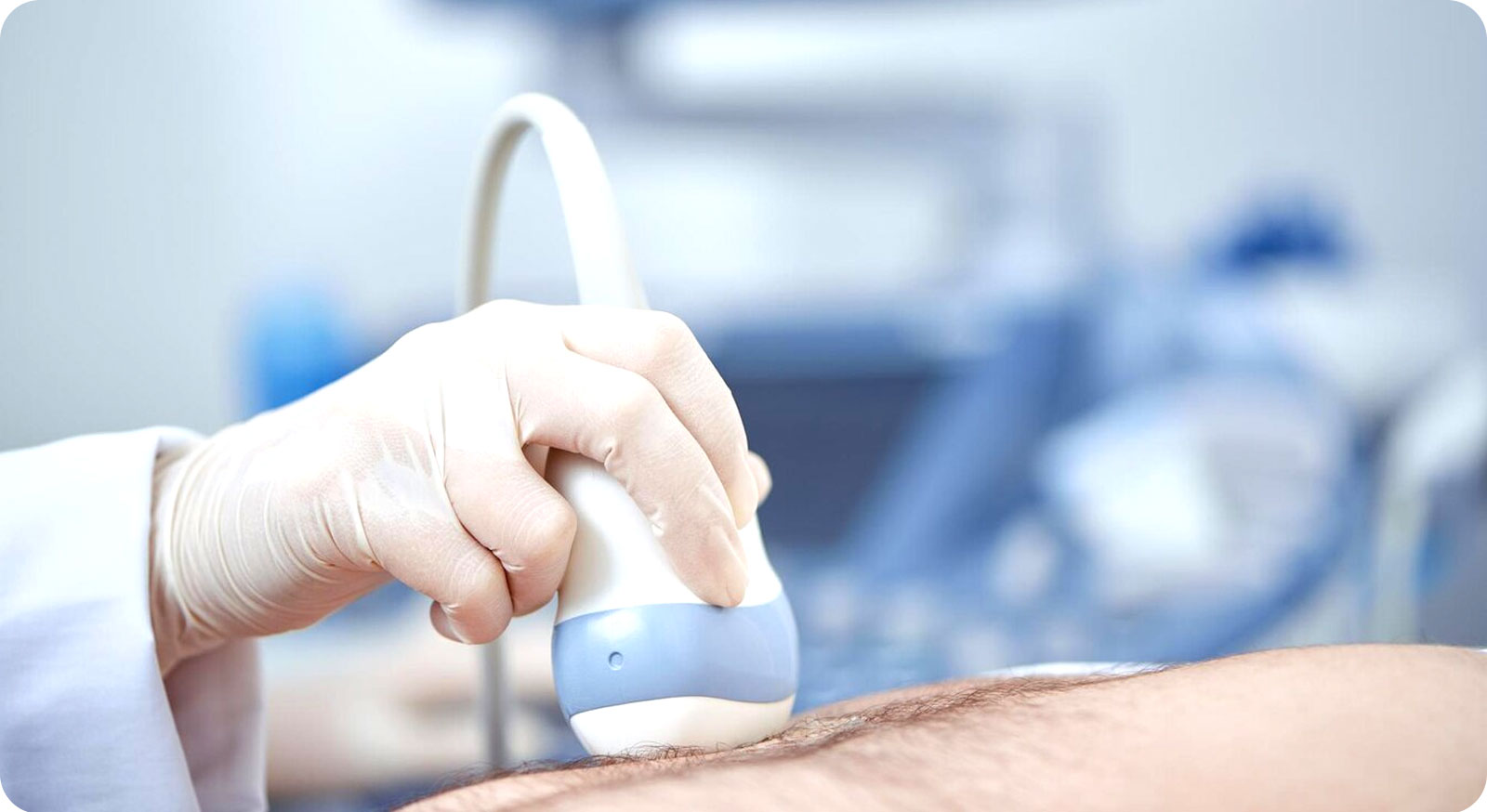
Understanding the factors and variations
Ultrasound probes are essential instruments for healthcare professionals, enabling precise, non-invasive diagnostics. Their cost can vary considerably depending on several criteria. This article aims to inform professionals about the elements influencing ultrasound probe prices and to provide an estimate of current rates.
The different types of ultrasound probes
The market offers a variety of probes, each suited to specific applications:
- Convex probes: mainly used for abdominal examinations, they offer deep penetration and a wide overview.
- Linear probes: ideal for vascular and superficial imaging, providing high resolution for structures close to the surface.
- Endocavity probes: designed for gynaecological and urological examinations, allowing detailed visualisation of internal organs.
- Phased array (sector) probes: mainly used in cardiology, offering deep viewing with a narrow angle, ideal for cardiac imaging.
Factors influencing ultrasound probe prices
Several elements determine the cost of an ultrasound probe:
- Technology and frequency: high-frequency probes offer better resolution but less penetration, while low-frequency probes penetrate deeper with reduced resolution. Technological complexity directly influences price.
- Brand and compatibility: probes from well-known major brands can be more expensive. Compatibility with specific ultrasound machine models can also restrict options and affect cost.
- New vs. refurbished: buying new probes guarantees the latest technological advances, but at a higher price. Refurbished probes offer a more economical alternative, with often comparable performance.
- Accessories and additional features: some probes are equipped with advanced features, such as colour Doppler, which can increase the cost.
Price estimates by probe type
Ultrasound probe prices vary depending on their type and specifications:
- Convex probes: prices can vary, with models such as the 35C50EB convex probe listed at €1,999.79 excl. tax (Praxisdienst).
- Linear probes: rates are similar, with models offered around €1,999.79 excl. tax (Praxisdienst).
- Endocavity probes: prices can be higher, with models such as the L7R-E transrectal probe at €3,499.29 excl. tax (Praxisdienst).
- Sector probes: rates vary, with models such as the P3-A phased array probe at €2,094.79 excl. tax (Praxisdienst).
Purchasing options and budget considerations
To optimise investment, several options are available to professionals:
- Buying refurbished probes: specialist platforms offer verified second-hand probes, an economical alternative. For example, cardiac probes are available from €120, with an average price around €1,844 (Bimedis).
- Kits and bundled offers: some suppliers offer packs including several probes or additional accessories, allowing economies of scale.
- Maintenance considerations: it is essential to budget for the upkeep and any repairs of probes, to ensure their longevity and optimal performance.
Conclusion
The price of an ultrasound probe depends on many factors, including probe type, technology used, brand and condition (new or refurbished). It is crucial for healthcare professionals to assess their specific needs and compare available options to make an informed choice, weighing both required performance and budget constraints.
The probe repair option is often the most economical: beyond the savings made, it is also a gesture towards environmental protection, since the faulty probe is not discarded but repaired. Probe repair centres such as MIDES guarantee repaired probes, which is a further advantage over buying a new one.